Aquathermal study Ghent University

Gent – Muinkschelde & Ringvaart
Ghent University
2025
Aquathermal potential study
Aquathermal study Ghent University
.

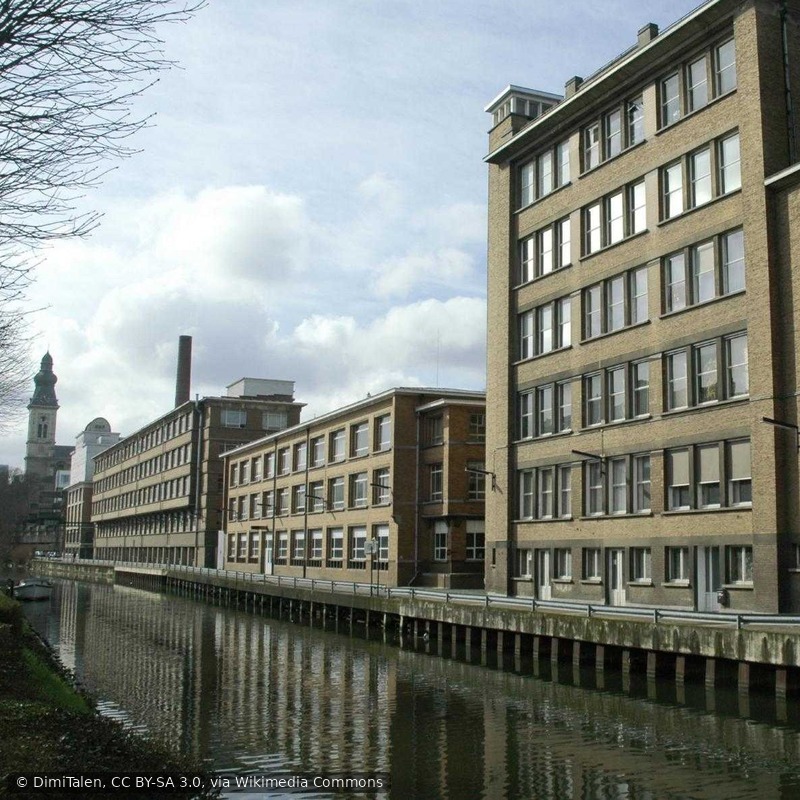
Ghent University is developing an energy master plan to heat its campuses sustainably by 2050. For two campuses on the water, the university wanted to know what role aquathermal energy could play: Sint-Pietersnieuwstraat campus, in the centre of Ghent along the Muinkschelde. Ardoyen campus, in Technologiepark Zwijnaarde on the Ringvaart canal. Working with Ingenium, which is drawing up the master plan, EXTRAQT determined the thermal potential of both waterways.

Aquathermal study Ghent University

.

Ghent University is developing an energy master plan to heat its campuses sustainably by 2050. For two campuses on the water, the university wanted to know what role aquathermal energy could play: Sint-Pietersnieuwstraat campus, in the centre of Ghent along the Muinkschelde. Ardoyen campus, in Technologiepark Zwijnaarde on the Ringvaart canal. Working with Ingenium, which is drawing up the master plan, EXTRAQT determined the thermal potential of both waterways.

Peak capacity Sint-Pietersnieuwstraat

350 kW

Peak capacity Ardoyen

26.8 MW

Heat production, both sites

24.3 GWh/year

Illustration of the use of a closed aquathermal system at a castle by a lake
The water determines the potential

.

Approach

For each waterway, we built a digital twin that calculates water temperature dynamically and in 3D. We overlaid the campus heat demand profile for 2050 and scaled it up until the water reached its thermal limit.

That limit follows from the Flemish policy framework for aquathermal energy, agreed with De Vlaamse Waterweg: a maximum homogeneous cooling of 3 °C, and 2 °C during the spawning season (May–October).

For each campus, we modelled two variants: aquathermal energy alone, and a combination with borehole thermal energy storage (BTES). Each scenario was optimised for either maximum peak capacity or maximum base load.

Sint-Pietersnieuwstraat – Muinkschelde

The Muinkschelde is a narrow urban branch with hardly any flow, so it was assessed as still water. In base load, aquathermal energy can cover around a third of the site’s heat demand, about 1.8 GWh of heat per year.

We also tested a hybrid concept in which the Muinkschelde regenerates a borehole field. There, the ground’s thermal balance proved to be the limiting factor. On that basis, Ghent University chose to develop aquathermal energy alone for the buildings between the Muinkschelde and the Sint-Pietersnieuwstraat.

Ardoyen – Ringvaart

On the Ringvaart, the potential is much higher. The large flow rate quickly carries the cooled plume away. As a result, with a source capacity of more than 20 MW, average cooling stays limited to 0.25 °C. That is enough to cover more than the full heat demand of the university buildings on campus, and around 55% of the heat demand of the entire Ardoyen campus.

Coupling with borehole storage adds little here: because of the high cooling demand, the borehole fields regenerate themselves. How the source potential will later be allocated to consumers depends on De Vlaamse Waterweg’s permitting rules.

Aquathermal study Ghent University

Our partners in this project

.

No items found.
Other success stories

.

Feasibility heatnetwork Oudenaarde

Feasibility study of a local heat network for the Maagdendale site in Oudenaarde

Marie Thumas

Aquathermal potential scan for Marie Thumas at the Vaart in Leuven.

Dijlemolens

Installation open aquathermal system in the apartment complex 'de Dijlemolens' at the Dijle river in the center of Leuven.

Backwards-pointing arrowForwards-pointing arrow
Discover our approach

Interested in an aquathermal installation? Read more on our approach on why an aquathermal system migh be interesting for your water body!